
Decoding Yarn Labels
Learn how to read and interpret yarn labels.
4/13/20263 min read
This post contains affiliate links, which means if you make a purchase through these links, I get a small commission at no extra cost to you!
Yarn labels are full of useful information! But it can be hard to interpret what they’re telling you sometimes. Here’s what you need to know.
Fiber Content
The fiber content of a particular yarn is often overlooked, especially by new knitters, but it actually tells you a lot about how the finished fabric will behave. For example, cotton yarn will stretch a lot when it gets wet, whereas wool has more elasticity. Check out my blog post on knitted fabric properties here to learn more. If you’re using yarn with a different fiber content than what a pattern calls for, always knit a gauge swatch. Not only will you be checking to match the gauge, but you can also see the drape of the fabric that yarn will create. Note that the fiber content will also affect the warmth, breathability, and elasticity of the fabric.
Weight (Thickness)
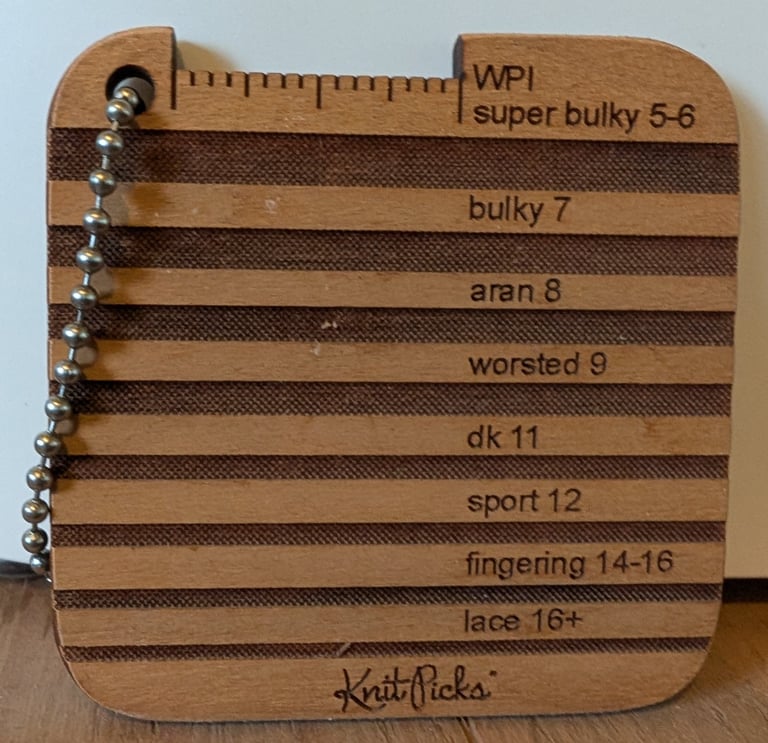
This tool, which I got from Knit Picks (you can find a similar one here), shows different thicknesses or weights of yarn, including about how many wraps per inch (WPI) you should get with each weight. These categories are equivalent to the numbering system used on standard yarn labels, which ranges from 0-7, 0 being lace weight, and 7 being jumbo/super bulky. Getting the right gauge for a particular pattern is important, but using the same weight of yarn is also important for getting a fabric with a similar density and drape to the original sample the designer made.
Gauge and Tools
Yarn labels usually have a range of recommended needle and hook sizes, along with a range of average gauge using those sizes of a 4” x 4” (10cm x 10cm) square. It’s important to note that these are just suggestions, and your personal gauge might differ from what’s on the label. If you tend to knit tightly, you may need to size up, or if you knit loosely, you may need to size down. The gauge on the label often represents a moderately dense fabric, and you might want a different result. For example, lace knitting usually calls for larger needles than what is recommended on the label because you want a more open and airy fabric. Using smaller needles will increase the density of the resulting fabric.
Yardage vs. Weight
Skeins of yarn often weigh 50 grams or 100 grams, but the yardage can vary drastically due to the thickness. 100g of a lace weight yarn will have significantly more yardage than 100g of a bulky yarn. When substituting yarn for a pattern, it is important to look at the specific yardage used, not just the number of skeins. Bulky yarns knit up very quickly, which can be great if you have a deadline, but I’ve heard many people argue that you get much more knitting enjoyment from lace weight yarns for a similar price!
Color and Dye Lot
The name of the colorway or the number assigned to that color is less important than the dye lot. When dying yarn, a certain batch of dye (or dye lot) can vary slightly in color from the next batch. This is especially true for small dye lots from local and indie dyers. If you’re buying multiple skeins of yarn for a project, check to make sure they are all from the same dye lot. This will ensure that you have the most consistent color throughout the project. If, for whatever reason, you have different dye lots, there are some tricks to help hide the shifts in color. You can alternate every 2-3 rows between the different dye lots to make sure that they are well integrated, and there isn’t just one place where the color shifts.
Care Instructions
The care instructions are important to check before making a project. You want the care instructions to be consistent with how you will treat the finished product. For example, non-superwash wool is not machine washable, and therefore, probably isn’t the best choice for children’s items. If there aren’t any care instructions on the label, it is best to wash the fabric by soaking it in a gentle wool wash in cold water, and lay it flat to dry, being careful not to let it stretch when wet.
I hope this post has given you some confidence in reading yarn labels, as that can be tricky for new knitters. I know it’s something I struggled with when I first started out! Happy stitching!

